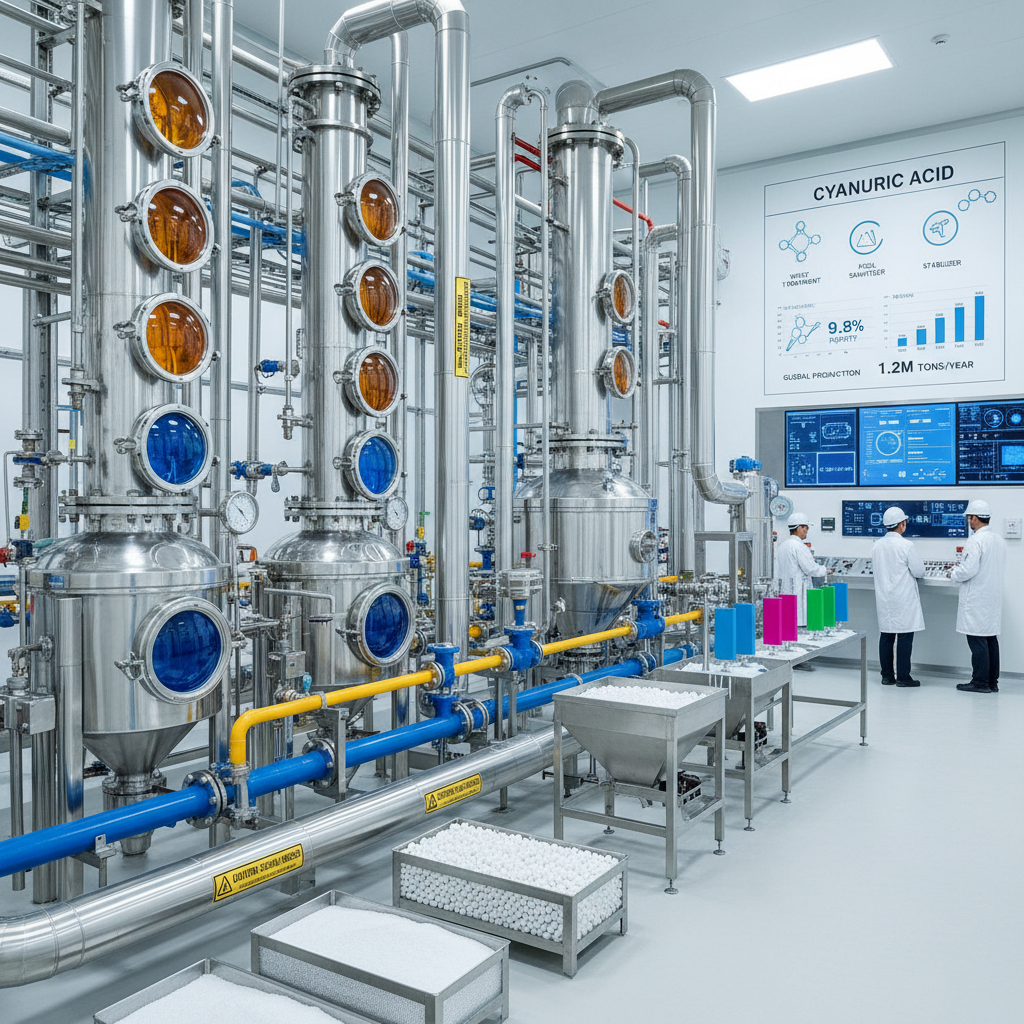
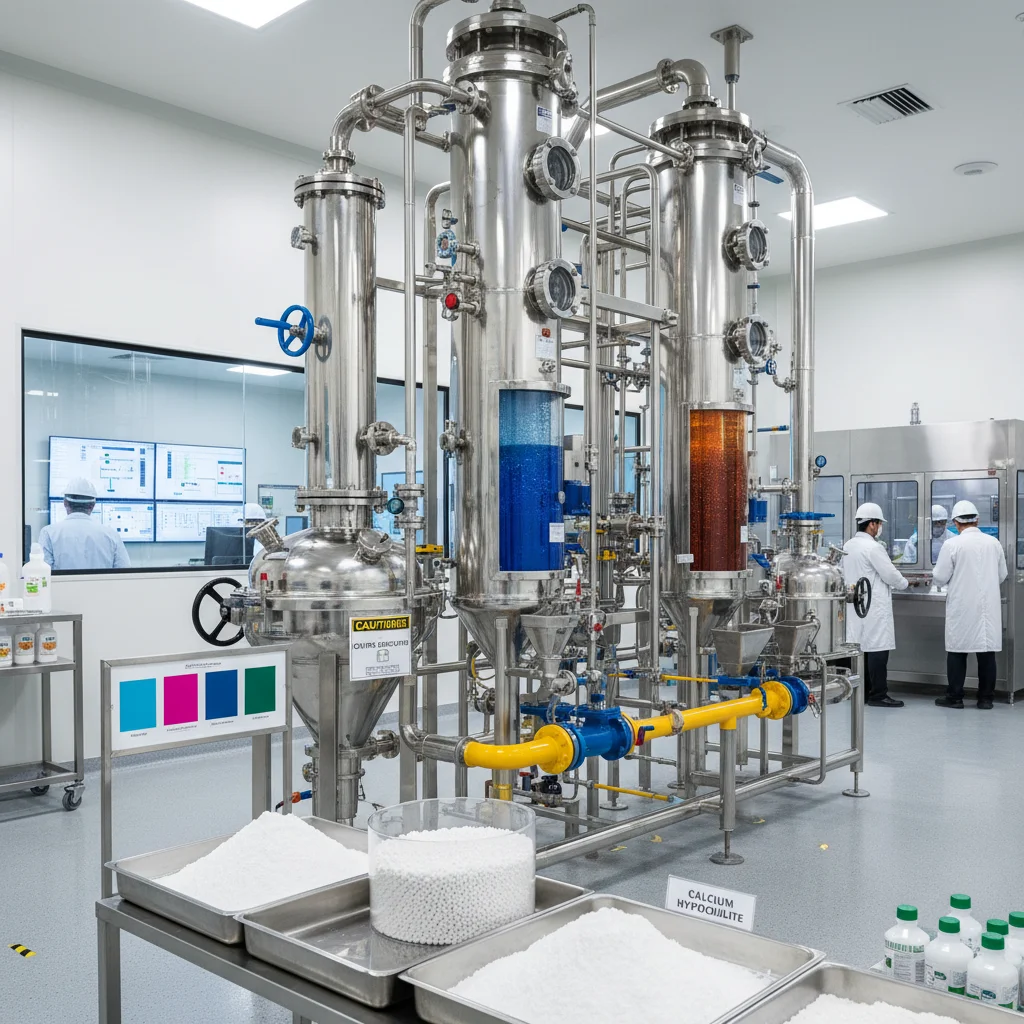
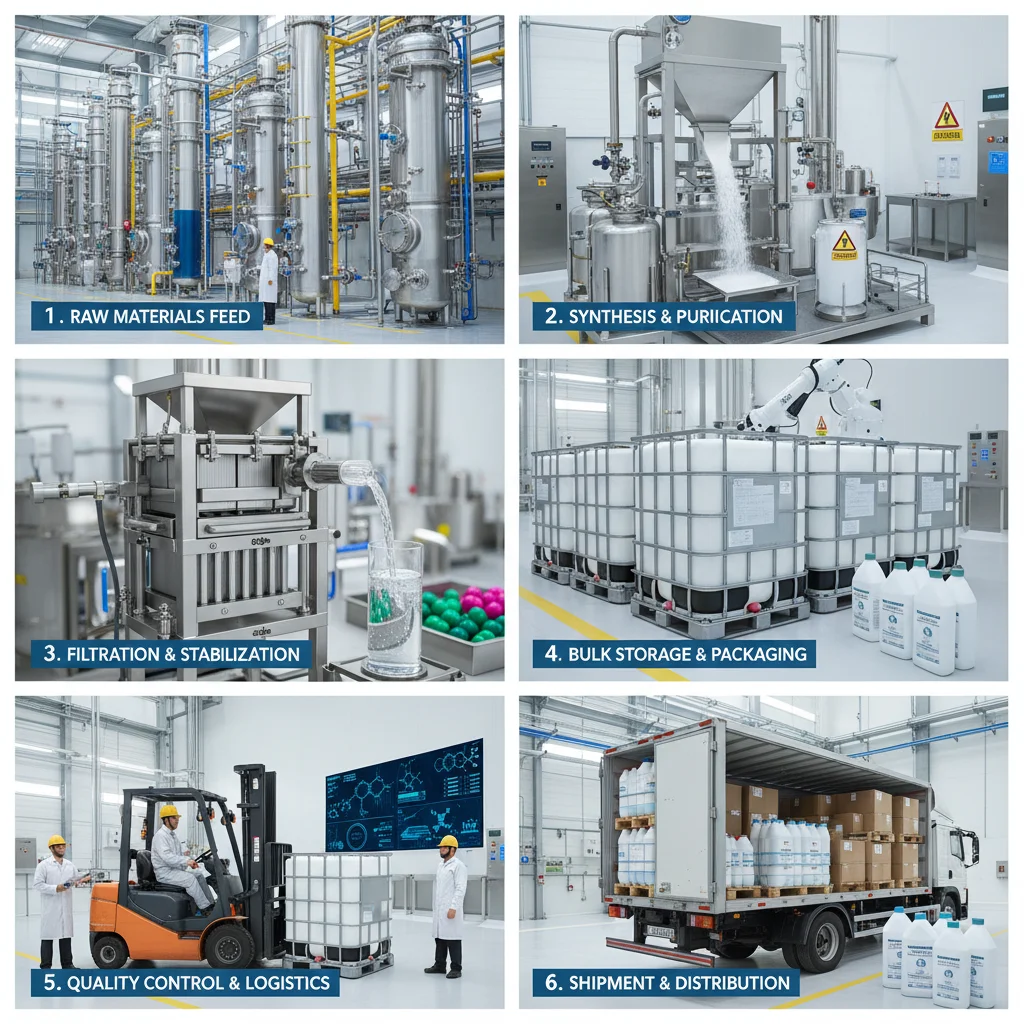
The global demand for high-efficiency water stabilization and chemical synthesis has brought the Cyanuric Acid product into the spotlight as a critical industrial building block. From maintaining the clarity of Olympic-sized swimming pools to serving as a precursor for specialty herbicides and disinfectants, this compound plays an invisible yet indispensable role in public health and industrial productivity. Understanding its chemical behavior and market application is essential for procurement managers and chemical engineers alike.
In the current regulatory climate, where environmental sustainability and chemical purity are non-negotiable, the quality of the Cyanuric Acid product determines the effectiveness of the final application. Whether it is used as a chlorine stabilizer or a flame retardant intermediate, the purity levels directly impact the cost-efficiency and safety profiles of the end-user's operations, making the choice of a reliable manufacturer paramount.
Globally, the shift toward advanced water treatment and the expansion of the pharmaceutical intermediate sector have accelerated the innovation of Cyanuric Acid product manufacturing. By leveraging modern synthesis techniques, industry leaders are now producing grades that offer superior solubility and stability, ensuring that critical infrastructure—from municipal water systems to high-tech labs—operates at peak performance.

Global Relevance of Cyanuric Acid product
On a global scale, the Cyanuric Acid product is fundamentally linked to the maintenance of sanitary water environments. According to industry benchmarks and WHO-aligned water safety guidelines, the use of stabilizers is crucial in outdoor aquatic environments to prevent the rapid degradation of chlorine by ultraviolet (UV) radiation. Without this stabilization, the cost of maintaining hygienic water would skyrocket, leading to increased risks of waterborne pathogens in public recreational facilities.
Beyond leisure, the chemical's role in the pharmaceutical and agricultural sectors is immense. As a precursor to triazine-based compounds, it enables the production of essential herbicides and specialized polymers. In regions with rapidly expanding industrial zones, particularly in Southeast Asia and North America, the demand for a stable, high-purity Cyanuric Acid product has become a barometer for the health of the regional fine chemicals market.
Defining the Cyanuric Acid product Architecture
In simple technical terms, the Cyanuric Acid product is a white, odorless crystalline powder known chemically as 1,3,5-triazine-2,4,6-triol. Its structure is characterized by a symmetric six-membered ring containing alternating carbon and nitrogen atoms. This unique molecular geometry allows it to act as an efficient chelating agent and a stable base for various chemical derivatives, making it a cornerstone of modern industrial chemistry.
From a humanitarian and public safety perspective, the "meaning" of this product extends far beyond its formula. It represents the ability to sustain clean water in arid regions and the capacity to produce cost-effective crop protection chemicals. By ensuring that chlorine remains active in water for longer periods, it reduces the frequency of chemical dosing, thereby lowering the environmental footprint of water treatment plants and reducing the exposure of users to concentrated chemical shocks.
Furthermore, the connection between the Cyanuric Acid product and modern industry lies in its versatility. It is not merely a final product but a platform molecule. By modifying its functional groups, manufacturers can create a wide array of derivatives, including chlorinated isocyanurates, which are used globally as high-efficiency disinfectants in both medical and industrial settings.
Core Components of Quality Cyanuric Acid product
When evaluating the efficacy of a Cyanuric Acid product, the first critical factor is Chemical Purity. High-grade products minimize the presence of impurities such as ammonia or urea residues, which can interfere with the synthesis of pharmaceutical intermediates or cause unwanted cloudiness in pool water. Purity is the bedrock of predictability in any chemical reaction.
Secondly, Solubility and Particle Distribution play a vital role. A premium Cyanuric Acid product is engineered for optimal dissolution rates. Whether provided in granular or powdered form, the particle size must be consistent to ensure that when it is introduced into a water system or a reactor, it disperses evenly without clumping, thereby preventing "hot spots" of high concentration.
Lastly, Thermal Stability and Shelf Life are paramount for global logistics. Given that these chemicals are often shipped across continents, the Cyanuric Acid product must resist degradation under varying temperature and humidity conditions. Robust stability ensures that the active concentration remains constant from the factory gate to the end-user's application site, guaranteeing consistent performance.
Industrial Applications and Use Cases
The real-world application of the Cyanuric Acid product is most visible in the "Pool & Spa" sector. In sunny climates like Australia, Florida, and the Mediterranean, UV rays break down free chlorine in minutes. By introducing cyanuric acid, the chlorine is "sequestered" and released slowly, effectively acting as a sunscreen for the sanitizer. This ensures that swimming pools remain safe and hygienic without requiring constant, expensive re-chlorination.
Beyond the backyard, this compound is critical in industrial water treatment and the synthesis of fine chemicals. For instance, in the production of Hydantoin series pharmaceutical intermediates, the structural integrity of the Cyanuric Acid product provides the necessary backbone for creating complex medicinal molecules. In remote industrial zones, where water recycling is mandatory, it helps in maintaining the stability of cooling tower chemicals.
Comparative Efficiency of Cyanuric Acid product Grades
Long-Term Value and Sustainability
Investing in a high-quality Cyanuric Acid product yields tangible economic benefits through the reduction of chemical waste. When the stabilizer is pure and the dissolution is uniform, operators can use the minimum required dosage to achieve the desired result. This not only lowers the direct procurement cost but also reduces the frequency of water drainage and replacement, which is a critical sustainability goal in water-scarce regions.
Moreover, the reliability of this product builds long-term trust between chemical suppliers and industrial end-users. In the pharmaceutical intermediate sector, the consistency of the Cyanuric Acid product prevents costly batch failures and ensures that the final medicine meets strict pharmacopeia standards. This reliability translates into safety for the patient and financial security for the manufacturer, blending logical economic gain with a profound social impact.
Future Innovations in Synthesis
The future of the Cyanuric Acid product is leaning heavily toward "Green Chemistry." Researchers are currently exploring bio-based precursors and catalyst-driven synthesis methods that reduce the emission of greenhouse gases during production. By transitioning away from energy-intensive heating processes to enzymatic or low-temperature catalysis, the carbon footprint of the manufacturing process is being significantly minimized.
Digital transformation is also playing a role. Smart manufacturing—utilizing AI-driven sensors in real-time—allows plants to monitor the crystallization process of the Cyanuric Acid product with unprecedented precision. This ensures that every batch has an identical particle size and purity level, eliminating the variance that traditionally plagued large-scale chemical production.
Additionally, we are seeing a trend toward "integrated stabilizers," where the Cyanuric Acid product is pre-blended with other synergistic agents. These advanced formulations are designed for automated dosing systems, reducing the need for manual handling and further increasing the safety and efficiency of water treatment operations in smart cities.
Overcoming Implementation Challenges
One of the most common challenges in utilizing the Cyanuric Acid product is "over-stabilization." When the concentration of cyanuric acid becomes too high in a water system, it can lead to "chlorine lock," where the chlorine is held too tightly and cannot effectively kill bacteria. This is a paradox where too much of a good thing renders the sanitizer useless.
The solution lies in precise monitoring and professional guidance. Expert consultants recommend the use of digital test kits and a strict dosing schedule based on the specific UV index of the region. By balancing the Cyanuric Acid product levels with the free chlorine concentration, operators can maintain a "sweet spot" of maximum efficacy and minimum chemical usage.
Another challenge involves the solubility of the product in cold water. To overcome this, innovative manufacturers are producing "fast-dissolve" micronized versions of the Cyanuric Acid product. These products utilize advanced milling technology to increase the surface area, ensuring rapid dissolution even in low-temperature environments, thus eliminating the risk of sediment buildup in piping systems.
Technical Comparison of Cyanuric Acid product Application Metrics
| Application Sector |
Key Requirement |
Purity Threshold |
Efficiency Score |
| Pool Maintenance |
UV Stabilization |
>98% |
9.5 |
| Pharma Intermediates |
Molecular Precision |
>99.5% |
9.8 |
| Agricultural Chems |
Cost-to-Yield Ratio |
>95% |
8.2 |
| Industrial Cooling |
Scale Prevention |
>97% |
8.7 |
| Flame Retardants |
Thermal Stability |
>98% |
9.0 |
| Textile Treatment |
Uniform Dispersion |
>96% |
7.9 |
FAQS
The primary purpose is to act as a stabilizer for free chlorine. In outdoor pools, the sun's ultraviolet rays can destroy up to 90% of chlorine in just two hours. The Cyanuric Acid product forms a chemical bond with the chlorine, protecting it from UV degradation and ensuring the water remains sanitized for a longer duration, which reduces the amount of chlorine needed over time.
Yes, this is known as "chlorine lock." When levels of cyanuric acid become excessively high, the bond between the stabilizer and the chlorine becomes too strong, preventing the chlorine from interacting with bacteria and algae. This renders the sanitizer ineffective despite high chlorine readings on a test kit. The solution is usually to partially drain the pool and refill it with fresh water to lower the concentration.
Absolutely, provided that the Pharmaceutical Grade is used. High-purity Cyanuric Acid product is a standard precursor for the Hydantoin series and other pharmaceutical intermediates. Because it provides a stable, symmetric nitrogen-containing ring, it is ideal for creating the specific molecular architecture required for various medications, provided that impurity levels are strictly controlled.
It should be stored in a cool, dry, and well-ventilated area, away from strong oxidizing agents and acids. While it is chemically stable, keeping it in moisture-proof packaging is essential to prevent clumping (caking), which can hinder the dissolution process during application. Using palletized storage in a humidity-controlled warehouse is the industry best practice for maintaining product integrity.
The difference lies primarily in the application method and dissolution rate. Powdered forms offer faster dissolution and are often used in industrial reactors or for quick adjustments. Granular forms are preferred for manual application in pools as they are less likely to blow away in the wind and provide a more controlled release into the water, though they may take slightly longer to dissolve completely.
The most reliable way is through a Certificate of Analysis (CoA) provided by the manufacturer, which should list the assay percentage and specific impurities. For internal verification, HPLC (High-Performance Liquid Chromatography) or titration methods are used to determine the exact concentration and purity of the Cyanuric Acid product to ensure it meets the required industrial or pharmaceutical standards.
Conclusion
In summary, the Cyanuric Acid product is far more than a simple pool chemical; it is a versatile industrial tool that bridges the gap between environmental safety and chemical efficiency. From its critical role as a UV stabilizer in public health infrastructure to its precision use in pharmaceutical intermediates, the quality and purity of this compound directly influence the success of countless global operations. By focusing on high purity, optimal solubility, and sustainable synthesis, the industry continues to provide value across diverse sectors.
Looking forward, the integration of green chemistry and digital manufacturing will further refine the production of the Cyanuric Acid product, making it more eco-friendly and consistent. For businesses seeking to optimize their chemical procurement, prioritizing suppliers who embrace these innovations is the key to long-term operational stability. We invite you to explore our high-performance chemical solutions to elevate your industrial standards. Visit our website: www.leache-chem.com